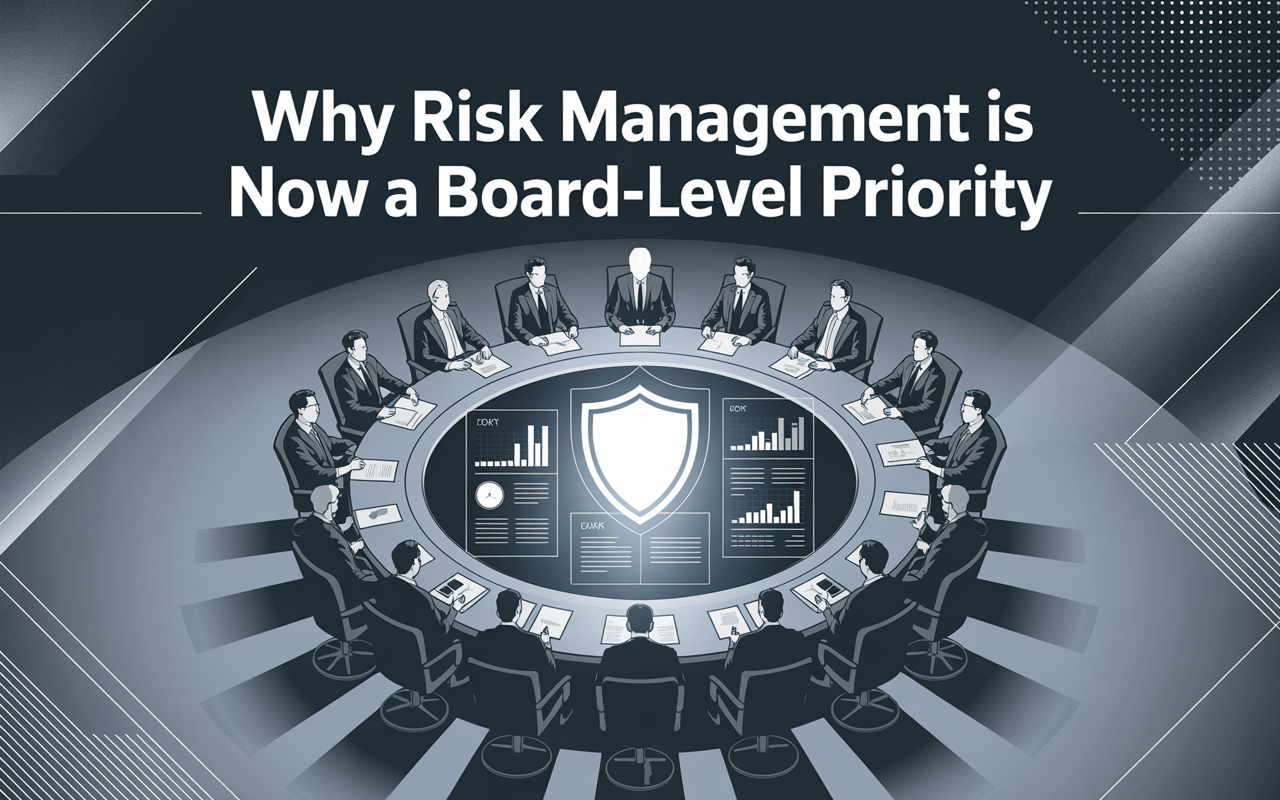
Why Risk Management is Now a Board-Level Priority
Statements
Author
Introduction
In 2025, boards face a new reality: risk management is no longer a back-office function. It is a boardroom priority that defines governance quality, investor trust, and long-term resilience.
Below are five messages every board needs to understand about risk.
Message 1: Risk is Strategic, Not Operational
Boards that treat risk as an afterthought face surprises. Today’s investors expect risk discussions at the same level as strategy, growth, and financial performance.
Message 2: Regulators Are Watching the Board
In markets like Saudi Arabia and Egypt, regulators increasingly hold boards directly accountable for compliance failures. Penalties don’t stop at management — they extend to directors who approve weak governance structures.
Message 3: Investors Link Valuation to Risk Oversight
Studies show firms with strong risk frameworks enjoy higher market valuations and lower cost of capital. Investors reward boards that proactively identify and mitigate risks.
Message 4: Fragmented Risk Management Fails
If audit, tax, and legal functions operate in silos, boards lack a clear view of enterprise risk. Fragmentation leads to duplication, delays, and missed blind spots — all of which erode confidence.
Message 5: Integrated Risk Management Builds Resilience
Boards need a single, integrated view of risk across:
Financial: Liquidity, reporting, tax liabilities.
Legal: Contracts, labor law, compliance.
Operational: Supply chains, data security.
Strategic: Governance, ESG, reputation.
Integration enables faster responses, stronger compliance, and improved investor trust.
Conclusion
Risk management is now a board-level priority because governance, compliance, and strategy are inseparable. Boards that take risk seriously don’t just protect value — they create it.
At Statements, we help boards and executives build integrated risk frameworks that protect growth and earn investor trust.
Introduction
In 2025, boards face a new reality: risk management is no longer a back-office function. It is a boardroom priority that defines governance quality, investor trust, and long-term resilience.
Below are five messages every board needs to understand about risk.
Message 1: Risk is Strategic, Not Operational
Boards that treat risk as an afterthought face surprises. Today’s investors expect risk discussions at the same level as strategy, growth, and financial performance.
Message 2: Regulators Are Watching the Board
In markets like Saudi Arabia and Egypt, regulators increasingly hold boards directly accountable for compliance failures. Penalties don’t stop at management — they extend to directors who approve weak governance structures.
Message 3: Investors Link Valuation to Risk Oversight
Studies show firms with strong risk frameworks enjoy higher market valuations and lower cost of capital. Investors reward boards that proactively identify and mitigate risks.
Message 4: Fragmented Risk Management Fails
If audit, tax, and legal functions operate in silos, boards lack a clear view of enterprise risk. Fragmentation leads to duplication, delays, and missed blind spots — all of which erode confidence.
Message 5: Integrated Risk Management Builds Resilience
Boards need a single, integrated view of risk across:
Financial: Liquidity, reporting, tax liabilities.
Legal: Contracts, labor law, compliance.
Operational: Supply chains, data security.
Strategic: Governance, ESG, reputation.
Integration enables faster responses, stronger compliance, and improved investor trust.
Conclusion
Risk management is now a board-level priority because governance, compliance, and strategy are inseparable. Boards that take risk seriously don’t just protect value — they create it.
At Statements, we help boards and executives build integrated risk frameworks that protect growth and earn investor trust.
Need Expert Guidance?
Talk to our financial, tax, and legal specialists about your business.